

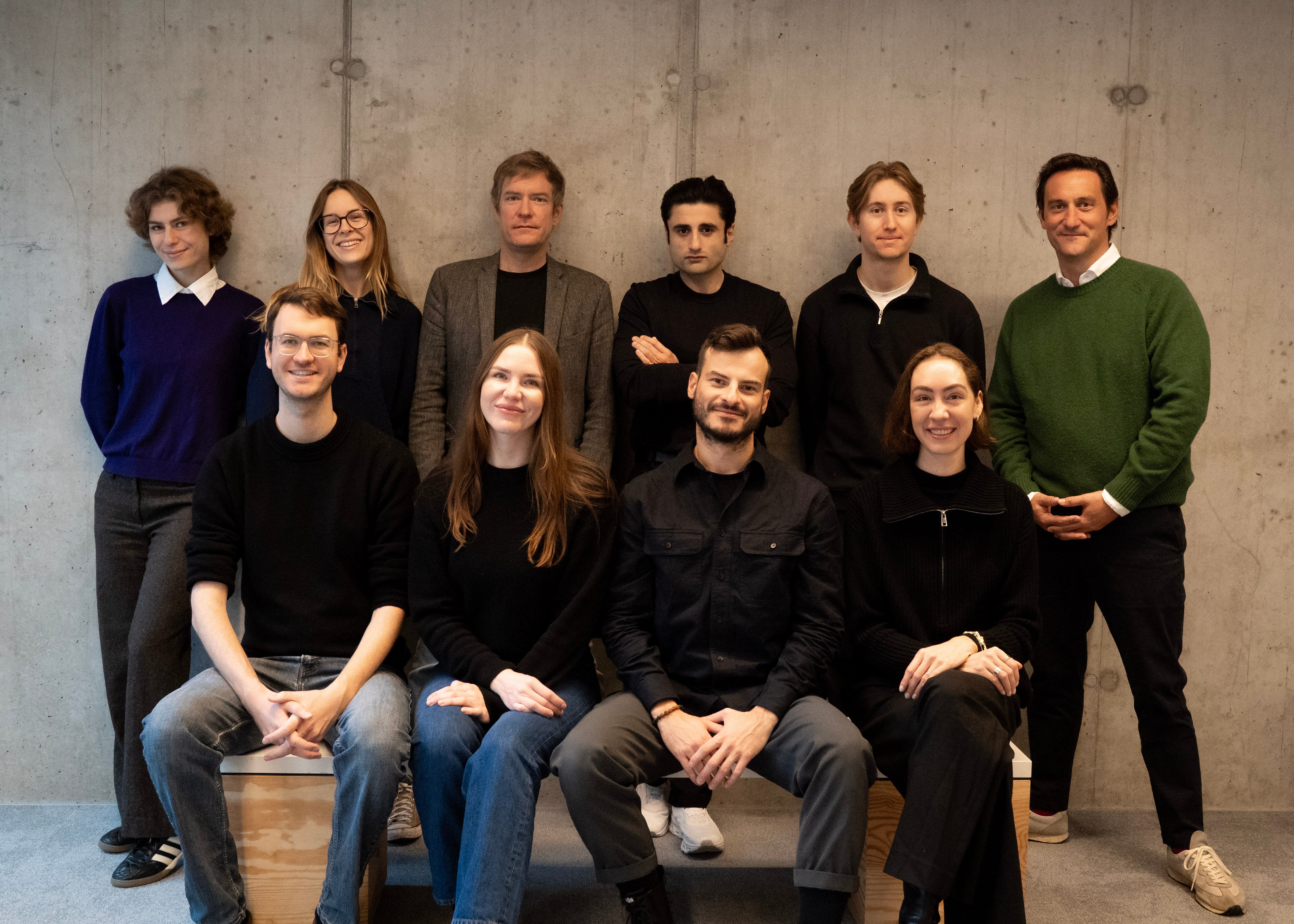
I’m very pleased to announce that FICUS Health has closed €3 million in funding, led by Redstone and following Merantix Capital’s initial investment through our venture studio.
Read more about the news in Handelsblatt.
When Benjamin Pochhammer first joined us on the AI Campus, he was looking into the intersection of AI and health, having previously founded CASPAR Health. Very quickly, Benny demonstrated not only passion for improving the lives of practitioners and patients, but also that he has the deep knowledge and expertise to build something big in this crucial area.
FICUS Health was born, centering on the rehabilitation space. Why? As Benny describes it, “Rehabilitation is a highly specialized environment with multidisciplinary teams, strict documentation rules, and a unique payor landscape dominated by the German Pension Fund. You can’t succeed here with a generic AI solution. You need deep domain knowledge.”
It’s a critical time, with clinics facing rising costs and workforce shortages. That’s why FICUS is so essential for practitioners, giving them more time to care for patients and reducing documentation effort by 70%.
FICUS has been off and running, working with nearly 100 rehabilitation clinics across Germany already.
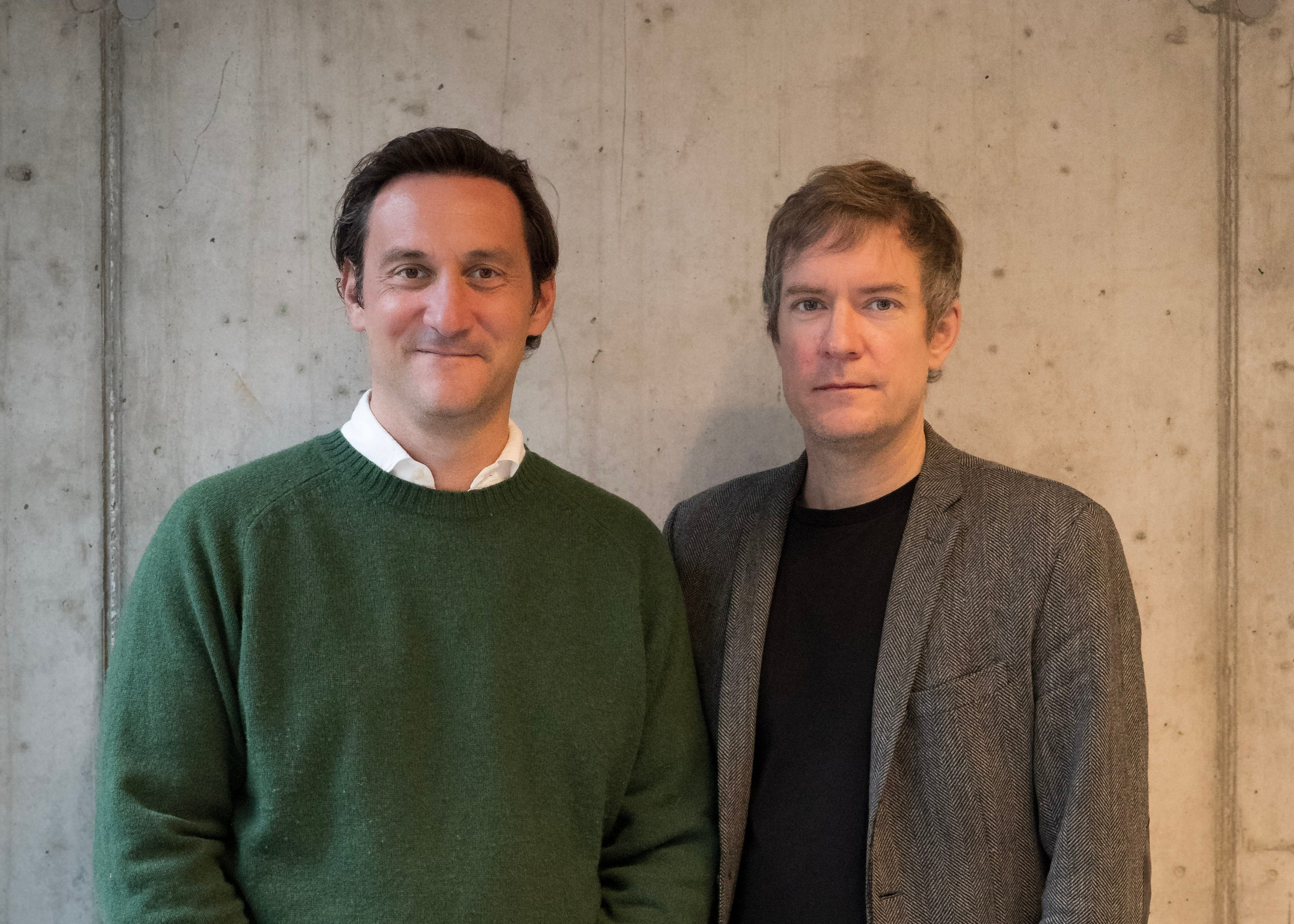
I recently sat down with Benny and his cofounder Mario Elstner for a conversation about FICUS, how AI is impacting the patient journey, and where things go from here.
Our edited conversation is below.
Adrian: What is FICUS and why is it so important right now?
Benjamin: FICUS is an AI platform that transforms documentation processes in the rehabilitation sector. We automate one of the most time-intensive tasks in the clinical workflow, giving healthcare professionals more time for what matters most: their patients. For rehabilitation centers, FICUS becomes an enabler, helping them create efficient processes, maintain quality, and stay operational despite growing resource constraints.
The need has never been greater. The healthcare sector is facing a historic workforce shortage. At the same time, rising costs and tight budgets put additional pressure on medical centers while documentation workloads remain disproportionately high. And we haven’t even mentioned demographic change yet. Europe will see a massive increase in people over 65, driving chronic conditions and dramatically increasing the need for rehabilitation services.
FICUS directly addresses these structural pressures by giving time back to medical teams and enabling the facilities to operate more sustainably.
Adrian: How do you see AI impacting the health care space?
Mario: AI already impacts healthcare immensely, and the most immediate change is happening in the administrative space. Clinicians spend a disproportionate amount of time on tasks that don’t require their medical expertise. So, AI won’t replace healthcare professionals, but it will become a powerful agent that takes over repetitive work. Rehabilitation centers using AI will set new standards for efficiency and quality that others will ultimately follow.
Beyond that, AI will help connect the entire patient journey. Healthcare is still extremely fragmented; data and information gets lost between roles, systems, and stages of care. AI has the potential to turn these fragmented workflows into intelligent, adaptive systems that are interoperable by design.
This shift is one of the very few scalable solutions we have for addressing workforce shortages and structural constraints in health systems.
We’ve loved having the FICUS team on the AI Campus and as a really important part of our ecosystem.
Benjamin: From day one we have actively used the Merantix ecosystem. In the early stages it gave us a space to brainstorm openly and challenge our assumptions. And being part of Merantix also makes it much easier to attract top talent.
Mario: One moment that captures this collaboration was in the very early days. Before FICUS even had a real product, the Merantix team helped us shape and test our first MVP. This early support enabled us to enter the rehab market quickly, validate the concept with real users and build from day one with direct user feedback.
And we still benefit hugely from the broader community, from the many HealthTech events and panel talks to deep-dive sessions with other tech experts, founders and engineers. It is an ecosystem that keeps opening doors and brings the right people into the conversation.
What will you use the new funding for?
Benjamin: We’ll use the new funding to significantly advance our product and develop additional applications along the entire rehabilitation journey. A major focus will be interoperability, making sure FICUS connects seamlessly with existing clinical systems and becomes part of the daily workflow. At the same time, we’re strengthening our organizational backbone and scaling our commercial and implementation teams to expand our market position across the German-speaking region.
There’s a lot of competition in the AI health space. How are you taking on that challenge to differentiate and build a moat?
Benjamin: Our biggest differentiation is our focus. Rehabilitation is a highly specialized environment with multidisciplinary teams, strict documentation rules, and a unique payor landscape dominated by the German Pension Fund. You can’t succeed here with a generic AI solution. You need deep domain knowledge. Having built a successful tech company in the rehabilitation sector before with CASPAR Health, I’ve seen firsthand how the system works, where the real bottlenecks are, and what rehabilitation centers actually need.
Mario: We also build a moat through context and data. FICUS structures patient conversations, medical records, and anamnesis data in a way that gives our AI a uniquely detailed understanding of rehabilitation workflows. Combined with auditor insights and continuous feedback from clinicians, this creates a compounding learning loop that makes FICUS increasingly accurate and tailored to this space.
What do you think the health care space looks like in 5-10 years after AI is more fully implemented across health systems?
Mario: I think AI will fundamentally change the health care space over the next decades. It will support data collection about patients during anamnesis, augment their judgement in diagnosis drawing on knowledge bases and medical literature, and support with treatment suggestions and therapy monitoring leveraging historical data.
For patients, this has the potential to result in better access to medical information and care, more timely treatment and a greater focus on preventing medical issues in the first place. Right now we’re only taking the first small steps, but in the long run, for a sector that’s notoriously underfunded and under demographic pressure, AI may prove to be truly transformational.
Thanks very much, and congrats!
