

There’s a lot of attention on how AI can help model our genomes, proteins, and cells. But much of what shapes real-world health outcomes happens outside of our DNA, and rather within the trillions of microbes living in our bodies.
Today, that layer remains one of the most complex and most under-modeled systems in human biology.
That’s what Outpost Bio is tackling: building frontier models at this interaction layer.
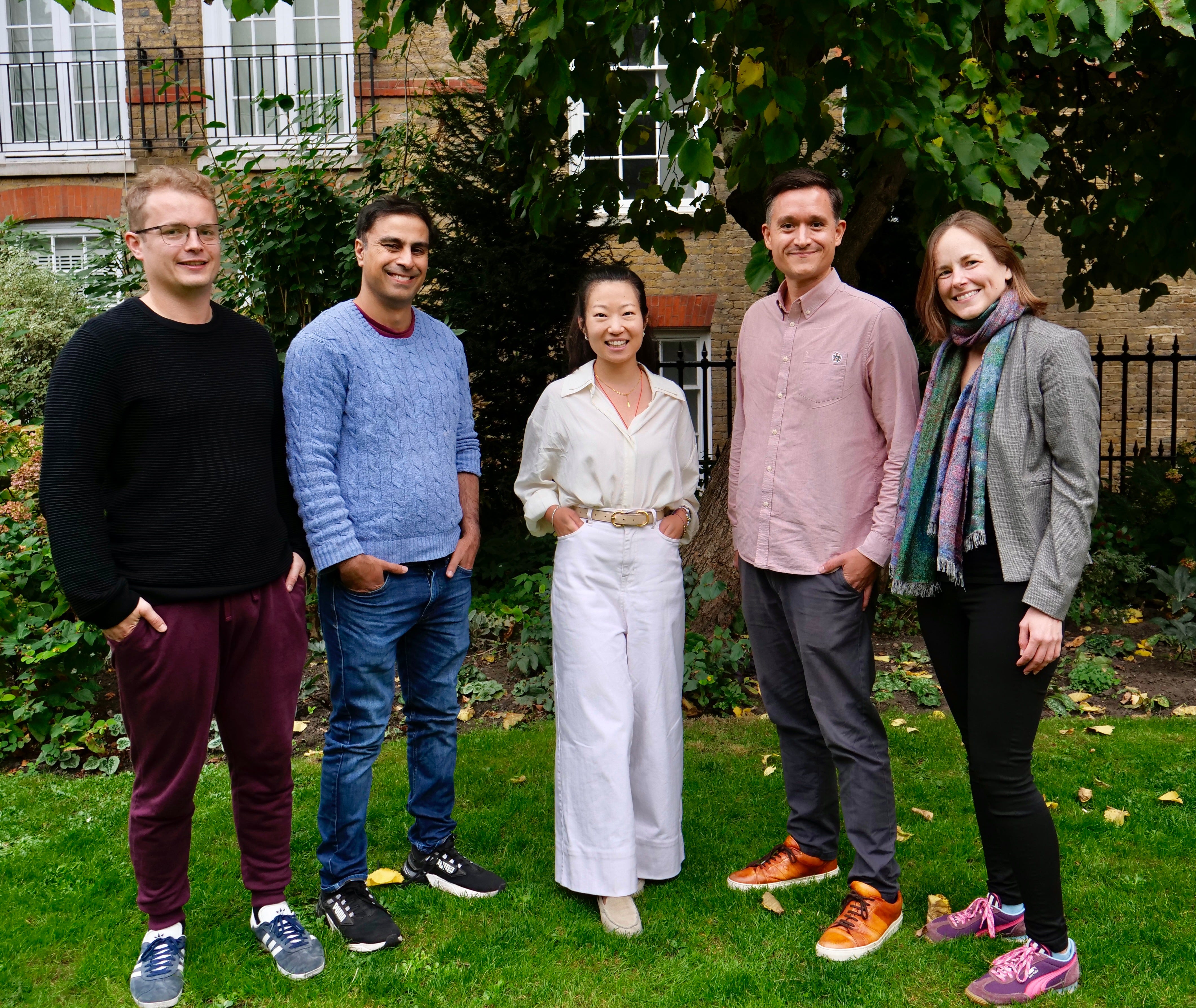
Today, we’re thrilled to announce that Merantix Capital has co-led Outpost’s $3.5M pre-seed alongside Seedcamp, with additional participation from OpenSeed VC, Defined, and strategic family offices and angels.
Outpost is led by a deeply impressive founding team: CEO Dr. Jenny Yang (Oxford PhD and former Marie Curie Fellow with a background in clinical machine learning), and COO Alex Merwin, former Head of Growth for Health & Bio Startups at AWS.
As Jenny put it, “Building the most comprehensive dataset in human microbiology gives us a true foundation layer for modeling how microbial communities interact with drugs and other chemical inputs.”
I recently sat down with Jenny and Alex to discuss why microbiology is the next intelligence layer in medicine, what a true moat looks like in techbio, and how Outpost can reshape drug development and consumer health over the next decade.
Our edited conversation is below.
Adrian: Most biological frontier models focus on human DNA. You’re building at the interaction layer across microbial systems. What does that mean in practice, and why are you focusing on this space?
Jenny: Most biological AI models focus on human DNA — our genomes, proteins, and cells. We focus on the trillions of microbes that live in and on us, which directly interact with chemicals and shape how we metabolize drugs, absorb nutrients, and respond to products. These microbes contain far more genetic diversity than the human genome and can vary dramatically between individuals, making them a major — and highly personal — driver of health. We’re building models that capture this interaction layer so we can predict how this hidden ecosystem shapes real-world outcomes.
Adrian: How does Outpost Bio move beyond traditional microbiome research approaches?
Jenny: Traditional microbiome research has largely been limited to correlations, identifying associations between microbes and health outcomes, often relying on low-throughput systems like mouse models or bioreactors that can’t capture the diversity of real human microbial communities. Our lab-in-the-loop platform instead tests diverse, human-derived microbiomes against defined chemical perturbations at scale, directly measuring how drugs and compounds are transformed across different ecosystems. Machine learning then analyzes this highly dimensional, combinatorial space to pinpoint causal microbial drivers and determine the most informative next experiments. This closed feedback loop moves the field from correlation to mechanism, enabling us to model human microbiology at a scale and precision that wasn’t previously possible.
Adrian: Many techbio AI companies talk about proprietary data sets. What is the true moat here?
Alex: In practice, data alone is rarely defensible — it depreciates, it can be replicated, and in microbiome specifically, public datasets are growing fast. Our moat isn’t a static dataset. It’s the closed loop between wet lab and ML that generates new data designed to be maximally informative for model training.
We run high-throughput perturbation experiments on diverse, human-derived microbial communities — stool-derived communities, or SDCs — that capture the real complexity of the gut. Each experimental cycle feeds our models, and those models tell the lab exactly what to test next to fill the gaps in our understanding. That feedback loop means our dataset compounds in value with every iteration, and it’s tightly coupled to the models trained on it. You can’t just download it and replicate the insight.
On top of that, we’re building the infrastructure to make this data ML-ready at scale — enforced metadata, standardized representations, and a benchmarking suite that we intend to open-source. The companies that define how the field measures progress tend to stay at the front of it.
Adrian: Where do you go first as your commercial wedge and why?
Alex: Every oral drug is exposed to the gut microbiome before reaching systemic circulation. Microbial enzymes can activate, inactivate, or transform compounds — sometimes generating toxic metabolites or contributing to inter-patient variability in response.
Despite growing evidence, microbiome–drug interactions are not systematically profiled in preclinical development. There is no high-throughput, diversity-aware screen that captures how compounds behave across real human microbial communities.
We provide that missing layer. Our platform measures and models how compounds are metabolized across diverse microbiomes early in development — flagging potential toxicity signals, identifying variability risk, and informing formulation and clinical strategy before costly trials begin.
We’re starting with pharma because the unmet need is clear, the economic stakes are high, and structured pilot partnerships allow us to generate the high-quality data that continuously improves the platform.
Adrian: You describe building the most comprehensive dataset in human microbiology. What does that sort of data layer enable, and where do you see Outpost building from here?
Jenny: Building the most comprehensive dataset in human microbiology gives us a true foundation layer for modeling how microbial communities interact with drugs and other chemical inputs. Instead of isolated studies or correlations, we generate structured, high-throughput, causal data that allows AI models to learn transferable rules of microbial–chemical interaction. That data layer enables predictive tools for pharma, food, and consumer health companies to anticipate metabolism, toxicity, and variability before going into costly trials. From here, we see Outpost expanding into broader human microbiomes and becoming the intelligence layer that powers microbiology-driven product development.
Adrian: In 10 years, what looks different in consumer health or medicine because Outpost Bio exists?
Jenny: In 10 years, taking a drug or trying a new health product won’t feel like guesswork. Companies will be able to predict how different microbiomes metabolize a compound before it reaches patients or consumers, reducing unexpected side effects and variability in response. Personalized recommendations, from prescriptions to probiotics to skincare, will account for your microbial ecosystem, not just your genetics. Outpost will help make personalized medicine a reality by expanding it beyond human genomics to include the trillions of microbes that shape how our bodies actually respond.
Adrian: Thanks to you both. We’re excited to see what the future holds for Outpost Bio!
Check out Jenny’s recent panel at the Merantix AI Campus.
